
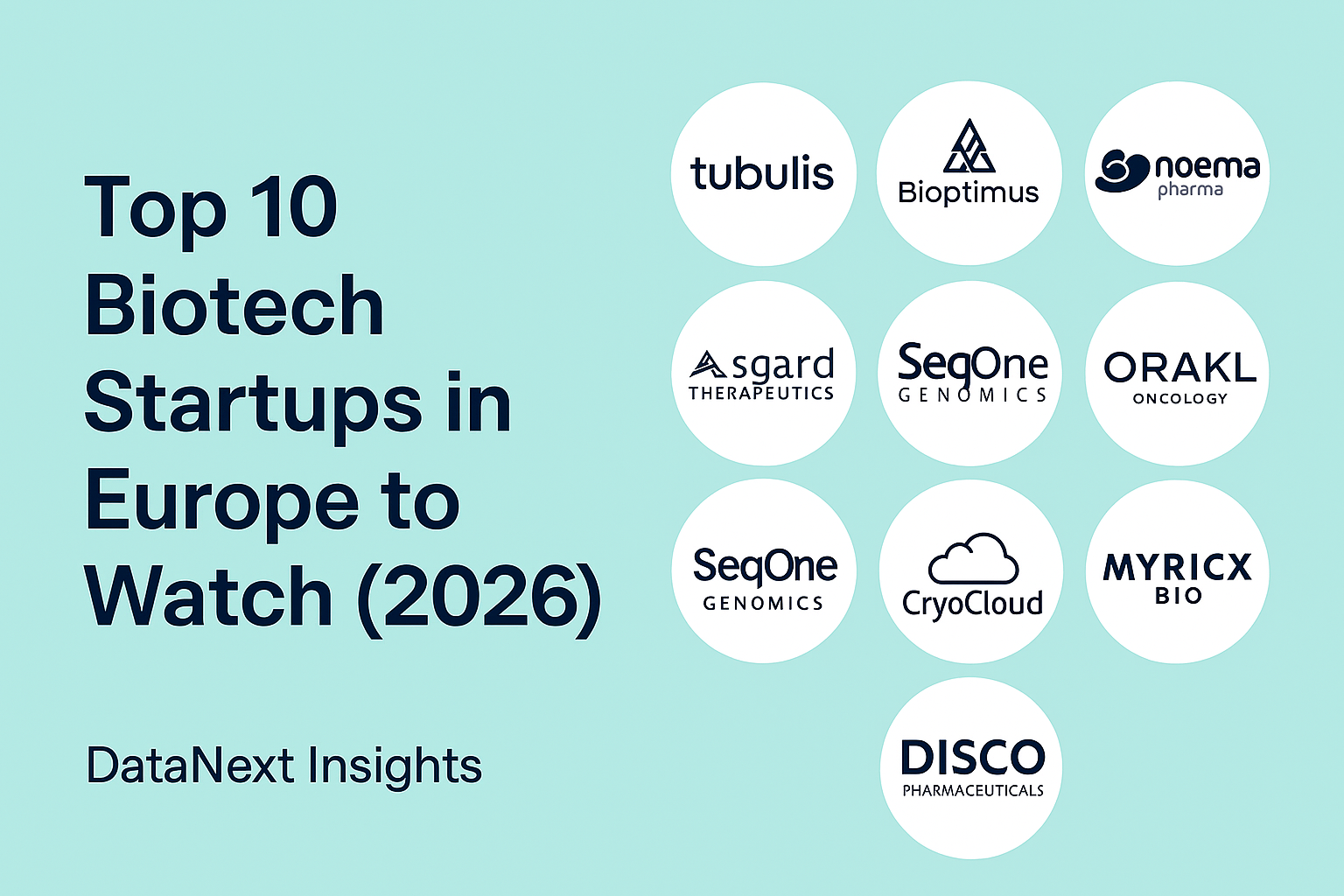
Top 10 Biotech Startups in Europe to Watch (2026)
Europe’s biotech industry is gaining serious momentum, driven by a mix of strong science, practical execution, and supportive public programs that help promising ideas move from the lab to real-world treatments. Across the continent, we’re seeing exciting developments from innovative cancer therapies and in-body cell reprogramming to advanced genomic tools and AI platforms that make sense of complex biological data. Investors are taking notice, and capital is flowing back to high-quality ventures. Europe’s unique ecosystem, built on leading universities, clinical research networks, and specialized manufacturing partners, gives startups the resources they need to scale quickly and responsibly.
In 2024, European startups raised about $51 billion, with healthcare and biotech leading at more than $11 billion. The UK dominated with $17 billion, followed closely by France at $7.9 billion and Germany at $7.6 billion, showcasing robust activity across these innovation powerhouses. Public initiatives like Horizon Europe, with its €95.5 billion budget for 2021–2027 (including €5.4 billion from NextGenerationEU), and the EIC Accelerator offering grants up to €2.5 million alongside equity investments from €0.5 million to €10 million, have proven vital for scaling deep-tech ventures globally. The EIC's STEP Scale-Up scheme further bolsters this by enabling larger equity rounds up to €30 million, fueling competitive growth.
1) Tubulis (Munich, Germany) — Building next‑gen ADCs with clinical momentum
Tubulis stands out as one of Europe's top-funded antibody-drug conjugate (ADC) developers, fresh off a landmark €308 million Series C round closed in October 2025, the largest ever for a European biotech and any private ADC company globally. This funding, led by Venrock Healthcare Capital Partners with heavyweights like Wellington Management joining in, powers their lead candidate TUB-040, a NaPi2b-targeted ADC with an exatecan payload via their innovative P5 conjugation platform (DAR of 8), now advancing through Phase I/IIa dose-escalation in the NAPISTAR-1-01 trial for platinum-resistant ovarian cancer.
The momentum built steadily: FDA Fast Track designation came in June 2024 for this hard-to-treat indication, based on compelling preclinical promise. Then, at ESMO 2025 in Berlin, they unveiled eye-opening first-in-human results from 1.67–3.3 mg/kg cohorts in heavily pretreated patients: a 59% overall response rate (50% confirmed, including one complete response), 96% disease control, and 81% CA-125 responses, all with a clean safety profile and maximum tolerated dose at 4.4 mg/kg. Early activity at low doses signals a wide therapeutic window, validating NaPi2b as a fresh ADC target and Tubulis' Tubutecan tech for precise exatecan delivery minus heavy toxicity.
A well‑capitalized platform advancing next‑gen ADC chemistry and linkers is positioned for pivotal trials and broader oncology indications
2) Bioptimus (Paris, France) — The “foundation model for biology” bet
Bioptimus has quickly become a standout in AI-driven biology, raising $41 million in January 2025 to hit a total of $76 million less than a year after launch, backed by Cathay Innovation, Sofinnova Partners, Bpifrance, and others like Hitachi Ventures. The team delivered H-Optimus-0, the world's largest open-source pathology foundation model trained on over 500,000 slides, which has already crushed benchmarks in independent tests from Harvard's HEST program for tasks like gene-expression prediction and cancer subtyping.
Now they're gearing up for a game-changer: a multiscale, multimodal foundation model linking molecules, cells, tissues, and patient-level data to simulate biology at unprecedented scale, potentially slashing preclinical timelines and unlocking precise therapies across pharma, biotech, and even cosmetics. The early results prove it can deliver real insights faster than siloed approaches.
Risks like data quality and privacy are real in this space, but Bioptimus counters with hospital network partnerships for diverse datasets, rigorous open benchmarks for validation, and a privacy-first open-source strategy that builds credibility while protecting sensitive info.
3) Asgard Therapeutics (Lund, Sweden)—revolutionizing cancer treatment through in-body cell reprogramming.
What sets Asgard apart is its lead candidate AT-108, an off-the-shelf gene therapy using a replication-deficient adenoviral vector to deliver three proprietary transcription factors directly into tumor cells, reprogramming them on-site into cDC1-like antigen-presenting cells. This clever approach turns tumors against themselves, forcing them to display their own antigens and ignite a personalized, systemic immune response—even in tough, checkpoint-resistant microenvironments as validated in peer-reviewed Science data from resistant mouse models and patient-derived samples.
A €30 million Series A round in March 2024, backed by Johnson & Johnson Innovation and others, has propelled them toward IND-readiness by 2026, with ongoing CMC development for GMP manufacturing and key preclinical studies like GLP toxicology underway.
Gene therapy risks such as delivery efficiency, effect durability, and off-target issues are mitigated by this in situ, off-the-shelf design, which skips complex ex vivo cell manufacturing and eases logistics for early clinical trials.
4) Noema Pharma (Basel, Switzerland)—streamlined CNS pipeline hitting Phase 2 milestones across key indications.
Noema Pharma has built a focused CNS portfolio that's gaining traction, extending its Series B to a total of CHF 130 million (about $147 million) in December 2024 with new backing from EQT Life Sciences alongside original investors like Forbion and Sofinnova Partners. This keeps four Phase 2 trials humming: basimglurant (NOE-101), an mGluR5 negative allosteric modulator for trigeminal neuralgia pain and tuberous sclerosis complex (TSC) seizures; gemlapodect (NOE-105), a PDE10a inhibitor targeting Tourette syndrome and childhood-onset fluency disorder (stuttering); plus NOE-115 for menopausal vasomotor symptoms. Key readouts expected in 2025 will sharpen go/no-go decisions and attract partners, capitalizing on novel mechanisms where tolerability and efficacy gaps persist.
CNS trials can stumble on subjective symptom scales and placebo noise, but Noema counters with diversified indications, patient-centric endpoints, and a lean setup to spotlight true signals.
5) CarboCode (Cantanhede, Portugal / Konstanz, Germany)—scaling human-identical milk lipids for nutrition and beyond.
CarboCode is making waves with its biotech precision fermentation to produce glycosphingolipids and gangliosides, key bioactive lipids mirroring those in human milk and organ membranes that boost infant cognition, immunity, and gut health, which most formulas sorely lack. A €15 million Series C in December 2024 fuels regulatory pushes (EU/US by 2027, China by 2028) and ramps up industrial production for B2B supply to global infant formula giants, with future plays in dermatology and adult cognitive supplements.
This positions them smartly at the nexus of science and commerce, filling a market gap with compounds backed by studies linking them to better neurodevelopment and microbiome balance.
Scaling purity and winning regulators pose hurdles, but CarboCode's phased approvals, dual-site ops (Portugal for development, Germany for R&D), and fermentation tech ensure tight quality control and compliance agility.
6) Orakl Oncology (Villejuif, France)—AI-powered patient avatars to slash oncology trial risks.
Orakl Oncology, a 2023 spin-out from Europe's top cancer center Gustave Roussy, grabbed €11 million in seed funding in December 2024, led by Singular with Bpifrance and prior backers to fast-track its O-Predict and O-Validate platforms. These AI-native tools use patient-derived tumor organoids laced with multi-omic data to create hyper-realistic "avatars" that predict responses, validate targets, and optimize combos, zeroing in on high-failure digestive cancers like colorectal and pancreatic where only 4% of candidates make it to patients.
The edge? Hospital-embedded credibility accelerates bench-to-bedside translation, making pharma partners eager for de-risked pipelines and quicker breakthroughs in precision oncology.
Ex vivo models risk losing clinical fidelity, but Orakl sidesteps this by emphasizing actionable decision support over pure discovery, pairing ML with lab rigor for tangible pharma utility right away
7) SeqOne Genomics (Montpellier, France)—scaling AI-driven NGS analysis for clinical genomics worldwide.
SeqOne Genomics raised €20 million in an oversubscribed growth round in May 2025, led by Supernova Invest with support from Elaia, Omnes, and Mérieux Equity Partners, to fuel global expansion, a HIPAA-compliant US launch post-Q1 2025 entry, and strategic M&A like multi-omics additions. Serving 140 lab customers across 22 countries, the company projects over 110,000 patient analyses in 2025, standardizing fast, accurate variant interpretation and reporting for oncology and rare diseases via its production-grade AI platform.
This positions SeqOne as a European leader in genomic decision support, bridging labs, clinicians, and pharma with audit-ready tools that cut analysis time from weeks to hours.
Challenges like workflow integration and payer scrutiny on utility are tackled head-on through emphasis on speed, seamless interoperability, and evidence-based clinical outcomes that labs and providers can trust
8) CryoCloud (Utrecht, Netherlands)—democratizing cryo-EM through cloud power.
CryoCloud is breaking barriers in structural biology with its €2 million seed round in May 2025, delivering cloud-based GPUs, petabyte-scale storage, and automated processing pipelines for cryo-electron microscopy (cryo-EM). This shifts cryo-EM from elite, hardware-intensive labs to an accessible "infrastructure-as-a-service" model, enabling biotech teams globally to resolve protein structures faster and cheaper, potentially trimming months from structure-based drug discovery timelines.
The appeal lies in making high-resolution insights routine for small biotechs tackling tough targets in oncology, neurology, and beyond.
Data security and result reproducibility are paramount in this field, but CryoCloud addresses them via ISO-certified workflows, standardized pipelines, and robust encryption to ensure reliable, shareable outputs across collaborations.
9) Myricx Bio (London, UK)—pioneering a fresh ADC payload class with NMT inhibitors.
Myricx Bio closed a landmark £90 million ($114 million) Series A in July 2024, co-led by Novo Holdings and Abingworth with participation from British Patient Capital, Cancer Research Horizons, Eli Lilly, and founders Brandon Capital and Sofinnova Partners. This hefty funding advances their novel N-myristoyltransferase (NMT) inhibitor payloads, a distinct mechanism from tubulin or topo-1 staples toward clinical proof-of-concept, while building out London labs to scale the platform across validated antigens like HER2, B7-H3, and TROP2.
Preclinical data shines: NMTi-ADCs delivered complete tumor regressions in solid tumor models, plus bystander killing and dual senolytic-cytotoxic effects that could unlock tougher indications.
Novel payloads bring human safety uncertainties, but Myricx de-risks via stepwise development on clinically proven targets, ensuring safer first-in-human trials with broad therapeutic potential.
10) DISCO Pharmaceuticals (Cologne, Germany / Schlieren, Switzerland)—unlocking cancer’s hidden surfaceome for targeted therapies.
DISCO Pharmaceuticals kicked off with a €20 million seed round in January 2024 and extended funding to €36 million by December 2025, enabling the first comprehensive surfaceome atlas for small-cell lung cancer (SCLC) and rapid development of bispecific ADCs and T-cell engagers against novel cell-surface target pairs. In tumors like SCLC with scant traditional targets, this surface proteomics mapping reveals new "handles" for precision attacks, pairing undruggable antigens to boost selectivity and efficacy.
Their platform has already spotlighted high-potential pairs, fueling a pipeline that could redefine treatments in hard-to-hit solid tumors.
Turning maps into drugs risks off-target hits, but DISCO's modular bispecifics and quantitative proteomics sharpen specificity, widening therapeutic windows for safer, more potent outcomes.
Why Europe helps these companies move faster
- One EU authorization, many markets. The EMA’s centralized procedure provides a single marketing authorization valid across the EU/EEA, vital for innovative oncology and rare‑disease therapies.
- Flexible routes to earlier access. Adaptive Pathways allow staged approvals and real‑world evidence, and orphan incentives include up to 10 years of market exclusivity, a strong tailwind for rare and high‑need conditions.
- Public capital that crowds in private. Horizon Europe and EIC Accelerator blend grants, equity, and non‑financial support (mentoring, partner access), helping teams bridge from prototype to pivotal trials.
What to watch in 2026
- Catalysts & readouts. Tubulis’ pivotal‑trial plans and TUB‑040 expansion; Noema’s Phase 2 decisions across multiple CNS assets; DISCO’s IND‑enabling packages; Asgard’s move toward first‑in‑human.
- AI’s next step. Bioptimus’ universal biology model and SeqOne’s product footprint into US health systems, both will test how fast AI can reshape discovery and diagnostics in real clinical settings.
- New targets, new payloads. Myricx and DISCO are about expanding what’s druggable; if early trials deliver clean signals, expect interest from global pharma and more European ADC deals.
The bottom line
The biotech sector in Europe is not just “catching up”. It is carving its own path with platform depth, capital discipline, and responsible access mechanisms, keeping patients in focus. These ten companies have the right mix of science, funding, and near‑term milestones to matter in 2026. If you follow healthcare innovation, keep them on your radar.
Related Articles
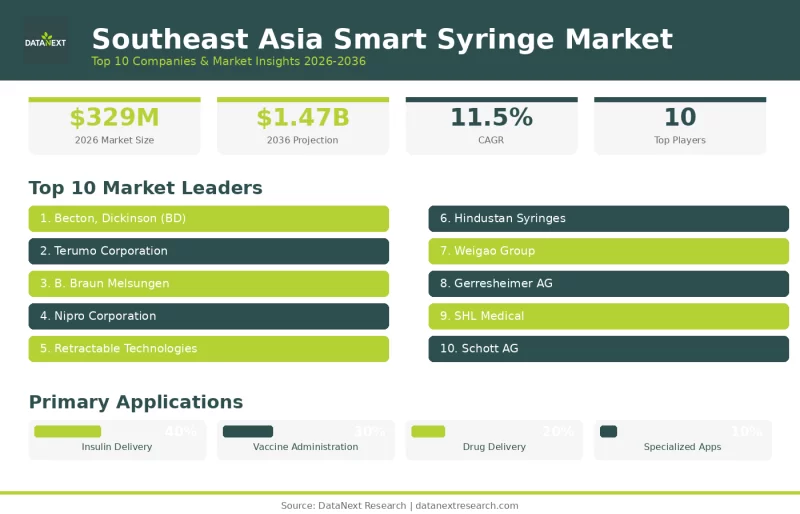
Top 10 Companies in the Southeast Asia Smart Syringe Market
Discover the Top 10 Companies in the Southeast Asia Smart Syringe Market driving growth to USD 1.47B by 2036, fueled by safety innovation, immunization demand, and healthcare modernization.
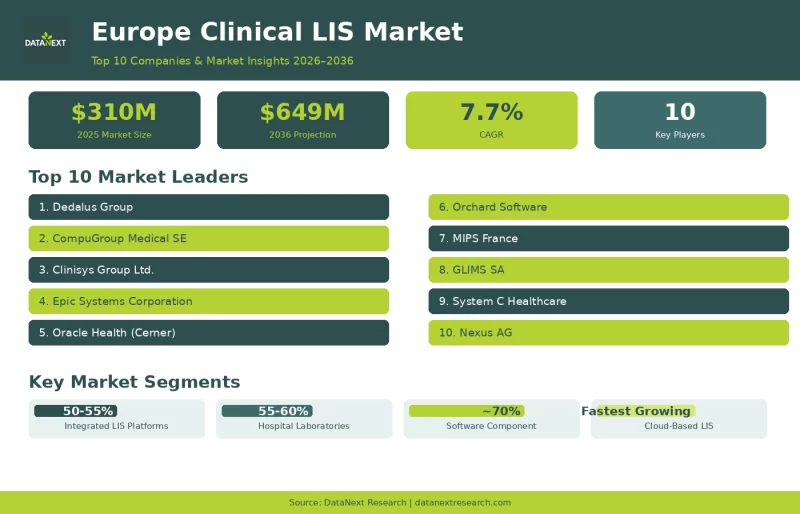
Top 10 Companies in the Europe Clinical Laboratory Information Systems (LIS) Market
Discover the Top 10 Companies in the Europe Clinical Laboratory Information Systems (LIS) Market driving growth with AI diagnostics, cloud LIS, and interoperable healthcare platforms.