
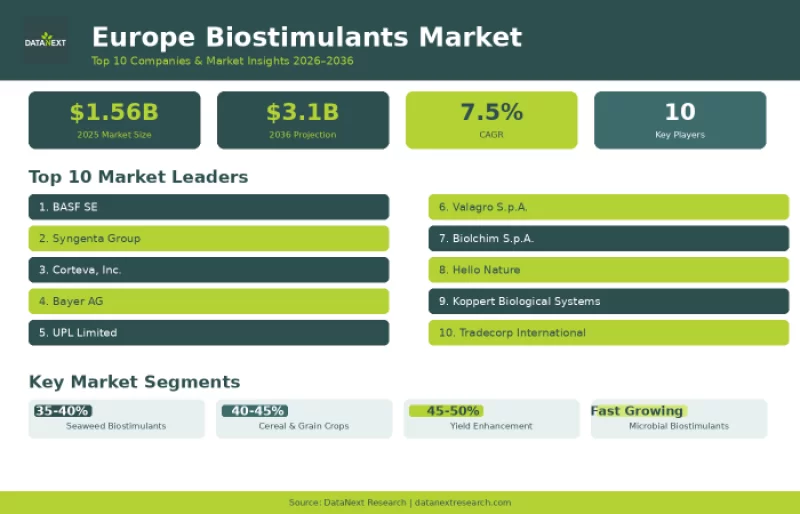
Top 10 Companies in the Europe Biostimulants Market
Facing mounting pressure from the EU Green Deal, the Farm to Fork Strategy, and the Common Agricultural Policy's ambitious sustainability targets, European farmers are rapidly rethinking the inputs that underpin their productivity. Biostimulants, natural or biological substances that enhance plant growth, improve stress tolerance, and optimize nutrient uptake without directly supplying nutrients themselves, have emerged as one of the most important product categories in this transformation. The Europe biostimulants market was valued at USD 1.56 billion in 2025 and is projected to reach USD 3.1 billion by 2036, growing at a CAGR of 7.5%.
Looking for a deeper understanding of how regulatory frameworks, organic acreage expansion, and biological crop input innovations are shaping the future of biostimulant adoption across European agriculture?
Explore the full market analysis: https://datanextresearch.com/report/europe-biostimulants-market
This growth reflects a fundamental shift in agricultural philosophy. Where previous generations of farmers relied heavily on synthetic nitrogen fertilizers, broad-spectrum pesticides, and intensive tillage to drive yields, the next generation is turning to seaweed extracts that strengthen root architecture, microbial inoculants that unlock soil nutrients, amino acid formulations that prime plant defenses against drought, and humic substances that rebuild organic matter in degraded soils. The EU's Farm to Fork target of 25 percent organic farmland by 2030 and its goal to reduce synthetic pesticide use by 50 percent within the same timeframe have created powerful regulatory tailwinds for the entire biostimulants category.
The companies leading this market span the full spectrum from global agri-business giants with multi-billion-dollar R&D budgets to highly specialized Italian and Spanish biotechnology innovators with decades of expertise in biological plant nutrition. Together they are building the scientific, regulatory, and commercial infrastructure for a new era of sustainable European agriculture. Here are the top 10 companies driving the transformation of biostimulants market in Europe.
1. BASF SE
BASF SE is one of the world’s leading chemical companies and a key participant in the European agricultural biologicals and biostimulants segment. Through its Agricultural Solutions division, which generates annual revenues exceeding EUR 9 billion, the company has expanded its focus on sustainable crop input technologies designed to complement conventional crop protection products.
BASF’s biostimulant portfolio includes solutions aimed at improving plant resilience, nutrient uptake, and root development under variable environmental conditions. These products are developed to support crop performance in stress-prone environments, including drought-affected soils and nutrient-deficient growing conditions.
The company also integrates biostimulant application strategies within its broader digital farming ecosystem, enabling data-driven decision-making based on satellite-based crop monitoring and vegetation health indicators. This approach supports more precise product application timing aligned with crop growth stages.
BASF employs approximately 112,000 people globally and operates an extensive agricultural R&D network, including research facilities in Germany and Belgium. Its development strategy for biostimulant solutions emphasizes scientific validation, regulatory compliance with the EU Fertilising Products Regulation (FPR), and compatibility with Integrated Pest Management (IPM) frameworks.
Leveraging global formulation expertise, field-testing infrastructure, and distribution capabilities, BASF continues to expand the availability of biostimulant products across European farming systems focused on sustainable productivity enhancement.
2. Syngenta Group
Syngenta Group is one of the world’s leading agricultural technology companies, with global sales exceeding USD 33 billion and a growing focus on biological crop inputs, including biostimulants. Since its acquisition by ChemChina in 2017, the company has expanded its investment in sustainable agricultural solutions designed to improve crop resilience and resource-use efficiency.
The biostimulant portfolio of Syngenta includes amino acid- and protein hydrolysate-based formulations developed to support root development, enhance nutrient uptake, and improve plant tolerance to abiotic stress factors such as drought and elevated temperatures.
Its Isabion® product range is widely recognized across European agricultural markets for application in cereal and horticultural crops, particularly in stress-prone growing environments. These solutions are supported by Syngenta’s digital agronomy platforms, which enable application planning based on field-level variables such as weather conditions and soil moisture availability.
The position of Syngenta in the European biostimulants segment has been further strengthened by its acquisition of Valagro in 2020, adding scientific expertise in seaweed extracts, microbial inputs, and plant-derived biostimulant technologies to its existing commercial infrastructure.
With operations spanning over 100 countries, Syngenta combines agronomic research capabilities with extensive distribution networks to support the deployment of biostimulant solutions across diverse European farming systems.
3. Corteva, Inc.
Corteva, Inc., established following the DowDuPont spin-off in 2019, has developed a growing presence in the European biostimulants segment through its Biologicals portfolio focused on improving nutrient efficiency and soil health. With annual revenues of approximately USD 17 billion and operations in more than 140 countries, the company brings significant agricultural research capabilities to the biological crop inputs market.
One of key biological solutions of Corteva, Utrisha™ N, is based on Methylobacterium symbioticum, a naturally occurring nitrogen-fixing microorganism. The product is designed to support plant nitrogen availability through biological fixation, enabling farmers to partially supplement synthetic nitrogen fertilizer inputs across cereal, oilseed, and row crop systems.
Field evaluations conducted in European wheat and maize cultivation environments have indicated the potential to reduce nitrogen fertilizer application rates without adversely affecting crop yield outcomes, supporting both cost efficiency and environmental sustainability objectives.
Corteva invests approximately USD 1.3 billion annually in research and development, with ongoing biological product development initiatives targeting nutrient mobilization, plant stress tolerance, and improved root system architecture.
Leveraging its established commercial networks across major cereal and oilseed production regions within Europe, Corteva continues to scale the deployment of biological and biostimulant solutions within sustainable crop management frameworks.
4. Bayer AG
Bayer AG, a Germany-based life sciences company with Crop Science revenues approaching EUR 25 billion annually, has positioned biostimulants as part of its broader strategy to support sustainable and integrated crop management practices across European agriculture.
The biostimulant portfolio of Bayer includes plant-based formulations such as yucca-derived extracts and seaweed-based products, developed to support plant resilience under environmental stress conditions. These solutions are applied across high-value crop segments, including vineyards, orchards, and vegetable production systems in regions increasingly affected by water scarcity.
The company has also introduced biological seed treatment technologies designed to improve early-stage plant development and enhance tolerance to abiotic stress factors during germination and initial growth phases.
The competitive positioning of the company in the European biostimulants market is supported by its ForwardFarming initiative, a network of demonstration farms across multiple European countries that showcases sustainable agricultural practices and integrated crop input solutions in real-world field conditions.
With approximately 100,000 employees globally and an extensive agronomic advisory network, Bayer maintains the infrastructure required to support farmer education, product validation, and the broader adoption of biostimulant technologies within European farming systems.
5. UPL Limited
UPL Limited, one of the world’s leading crop protection companies with global revenues exceeding USD 6 billion, has expanded its presence in the European biostimulants segment through its Natural Plant Protection (NPP) and sustainable agriculture platforms. With operations in more than 130 countries, the company leverages global distribution capabilities to support the deployment of biological crop inputs across diverse farming systems.
The biostimulant portfolio of UPL in Europe includes seaweed-based formulations, humic and fulvic acid products, and microbial inoculants, marketed under brands such as Cytokin and Pronutiva. These solutions are designed to improve nutrient-use efficiency in cereal and oilseed crops while enhancing stress tolerance in fruit and vegetable cultivation systems.
The OpenAg framework of the company reflects its focus on sustainable agriculture and integrated crop management approaches, which align with Europe’s evolving regulatory landscape for environmentally responsible farming practices.
The acquisition of Arysta LifeScience in 2019 strengthened European distribution network of the UPL, enabling improved access to biological crop inputs across both large-scale and smallholder farming operations, particularly in southern and eastern Europe.
Through cost-competitive biological formulations and an established regional supply chain, UPL continues to support the adoption of biostimulant technologies within productivity-focused and sustainability-driven agricultural practices across Europe.
6. Valagro S.p.A.
Valagro S.p.A., founded in 1980 in Italy, is a well-established European specialist in plant nutrition and biostimulant solutions. Now part of the Syngenta Group following its acquisition in 2020, the company continues to focus on the development of plant-based and microbial biostimulants supported by scientific research and agronomic field validation.
The product portfolio of Valagro includes solutions based on protein hydrolysates, seaweed extracts, and beneficial microbial strains, designed to support plant growth, improve nutrient uptake, and enhance resilience to environmental stress factors such as drought and nutrient deficiency.
Products such as YieldOn®, Megafol®, and VYTOX® are applied across a range of crop types including cereals, vineyards, orchards, and horticultural crops. These solutions are intended to improve crop performance indicators such as fruit set, plant vigor, and nutrient availability under varying field conditions.
Valagro operates manufacturing facilities in Italy and employs approximately 800 people globally. Its research initiatives are supported by the company’s GROWMORE platform, which integrates plant physiology, soil science, and analytical chemistry to support the development of next-generation biostimulant formulations.
Through its integration within Syngenta’s global commercial infrastructure, Valagro continues to expand the availability of biologically derived crop inputs across European agricultural systems focused on productivity and sustainability.
7. Biolchim S.p.A.
Biolchim S.p.A., established in 1972 in Bologna, Italy, is one of Europe’s long-standing manufacturers specializing in plant nutrition and biostimulant solutions. The company has focused on plant-based formulations for several decades, supporting crop performance through the use of amino acids, seaweed extracts, and humic substances.
The product development approach of Biolchim is based on crop-specific requirements across different growth stages, with formulations designed to support plant metabolism, nutrient uptake, and resilience to environmental stress conditions.
The company offers a portfolio that includes products suitable for organic farming systems, contributing to its adoption across Europe’s expanding organic agriculture sector. These solutions are applied across a variety of crop types, including horticultural produce, vineyards, orchards, and field crops.
Biolchim operates manufacturing facilities in Italy and maintains ISO 9001-certified quality management systems to ensure consistency in product formulation and performance. With exports to more than 70 countries and a workforce of over 350 employees, the company supports the application of biostimulant technologies across both conventional and organic farming systems in Europe.
8. Hello Nature (formerly Italpollina)
Hello Nature, formerly known as Italpollina, is an Italy-based company specializing in plant nutrition and biological crop solutions. The company focuses on the development of biostimulant products derived from organic nitrogen sources, amino acids, and microbial-based formulations aimed at improving plant growth and soil health.
The portfolio of Hello Nature includes amino acid-based biostimulants and microbial soil enhancement products applied across vineyards, orchards, vegetable cultivation systems, and field crops throughout European agricultural regions.
Its product offerings are designed to support nutrient availability, root development, and soil biological activity under varying environmental conditions. These solutions are utilized across crop systems requiring improved nutrient-use efficiency and resilience to abiotic stress factors.
Headquartered in Rivoli Veronese, Italy, Hello Nature collaborates with academic and research institutions to evaluate product performance under European field conditions. The company has expanded its commercial footprint across key agricultural markets including France, Spain, and Northern Europe, supporting the adoption of biological crop inputs within sustainable farming practices.
9. Koppert Biological Systems
Koppert Biological Systems, a Netherlands-based company founded in 1967, is a leading provider of biological crop protection and plant health solutions across European agriculture. The company operates in more than 100 countries and supports the adoption of biological alternatives within both horticulture and field crop production systems.
The biostimulant portfolio of Koppert includes products based on beneficial microorganisms such as Trichoderma species, which are applied to support root development and improve plant resilience under soil-borne stress conditions.
Solutions such as the Trianum® range are designed to enhance root health and promote plant growth through microbial activity in the root zone. In addition, the company offers mycorrhizal-based formulations that support nutrient uptake, particularly phosphorus, by establishing beneficial associations between plant roots and soil fungi.
These biological solutions are used across a range of crop types, including greenhouse vegetables, field crops, and soft-fruit cultivation systems, where improved nutrient efficiency and drought tolerance are critical for productivity.
Koppert employs approximately 3,500 people globally and continues to invest in research and development to support the advancement of biological crop input technologies within sustainable European farming practices.
10. Tradecorp International
Tradecorp International, a Spain-based company founded in 1985, operates as part of the Sapec Agro Business Group and has developed a strong presence in the European biostimulants market. The company specializes in plant nutrition solutions including micronutrients, humic and fulvic acid-based formulations, and amino acid-derived biostimulants.
The portfolio of Tradecorp includes products designed to improve soil structure, nutrient availability, and root development—particularly in regions experiencing soil degradation and water stress, such as Mediterranean agricultural zones across Spain, Italy, Greece, and Portugal.
Solutions such as Humifirst® are formulated to enhance soil fertility and support plant nutrient uptake, while amino acid-based products within its Cropmax range are applied across fruit and vegetable production systems to support crop quality and resilience under environmental stress conditions.
Tradecorp operates in more than 60 countries and employs approximately 500 people globally. The company maintains research facilities in Spain that conduct field trials aimed at optimizing product performance across varying crop types and soil conditions in European farming environments.
Through its focus on nutrient efficiency and plant health support, Tradecorp contributes to the broader adoption of biostimulant technologies within productivity-focused and sustainability-driven agricultural practices across Europe.
Growing the Future: Europe's Biostimulant Revolution
The Europe biostimulants market is not merely a product category expanding to fill a regulatory gap left by synthetic input restrictions. It represents something more profound: a fundamental reconceptualization of the relationship between agriculture and the natural systems upon which it depends. The projected growth from USD 1.68 billion in 2026 to USD 3.1 billion by 2036 reflects a European farming sector in the midst of a genuine biological revolution.
The ten companies profiled in this analysis embody the full spectrum of that transformation. BASF, Syngenta, Corteva, and Bayer bring the scientific resources, regulatory expertise, and distribution infrastructure of global agri-business to biological innovation at scale. UPL offers cost-competitive access to biological solutions for the full range of European farm sizes. Valagro, Biolchim, Hello Nature, and Tradecorp contribute the deep specialist knowledge, entrepreneurial agility, and Mediterranean agronomic heritage that has historically placed southern Europe at the forefront of biostimulant science. Koppert bridges biostimulants and biological crop protection in a way that reflects the integrated biological systems thinking increasingly adopted by Europe's most progressive growers.
The future of this market will be shaped by several converging forces: the continued tightening of EU regulations on synthetic inputs, the escalating climate pressures that make abiotic stress tolerance an existential agricultural priority, the growing body of field evidence supporting biostimulant efficacy across diverse crop systems, and the integration of biostimulants into precision agriculture workflows that optimize application timing and placement. As soil health takes center stage in European agricultural policy and as the microbiome revolution reshapes our understanding of plant-soil interactions, the companies that can translate biological science into reliable, scalable, and economically justified farm-level solutions will define the next decade of European agriculture.
With increasing regulatory pressure to reduce synthetic fertilizer use and growing demand for sustainable crop inputs, Europe’s biostimulants market is entering a phase of accelerated adoption across cereal, horticulture, and specialty crop systems.
Are you positioned to benefit from this transition?
Our Europe Biostimulants Market (2026–2036) report delivers:
- Country-level demand outlook
- Amino acid, seaweed extract, and microbial product trends
- Organic farming adoption dynamics
- Nutrient-use efficiency and soil health insights
- Competitive profiling of leading biostimulant manufacturers
Download the Sample Report Now:
https://datanextresearch.com/report/europe-biostimulants-market?action=Download+Sample
Access the Full Market Report:
https://datanextresearch.com/report/europe-biostimulants-market
Related Articles
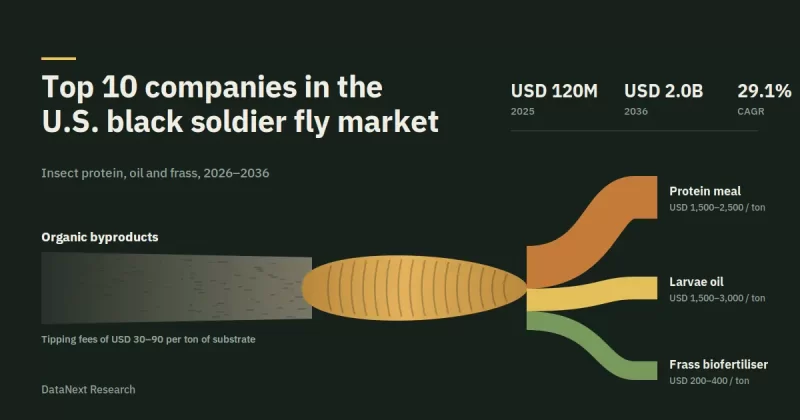
Top 10 Companies in the U.S. Black Soldier Fly Market
The top 10 U.S. black soldier fly companies in a market heading to USD 2.0 billion by 2036 — EnviroFlight, InnovaFeed, Protix, Entobel and more, ranked.
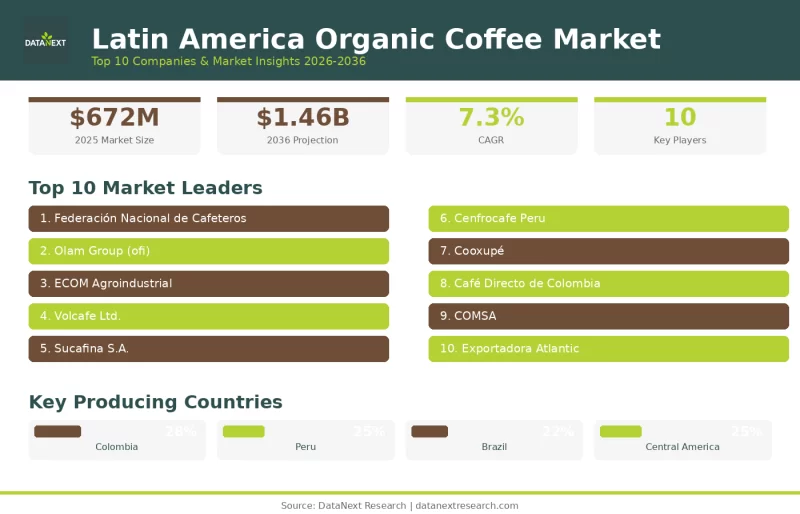
Top 10 Companies in the Latin America Organic Coffee Market
Discover the top 10 organizations driving Latin America’s organic coffee market (2026–2036). Explore leaders like FNC, Olam, ECOM, and Cooxupé shaping sustainable, traceable, and premium Arabica supply.
Best Food Processing Companies in Europe (Top 10) | Market Leaders & Innovation
Explore the top 10 food processing companies in Europe driving innovation, sustainability, and market growth across dairy, snacks, nutrition, and ingredients.