
Top 10 Companies in the U.S. Modular Housing Market
American modular housing is the industry everyone agrees should be bigger than it is.
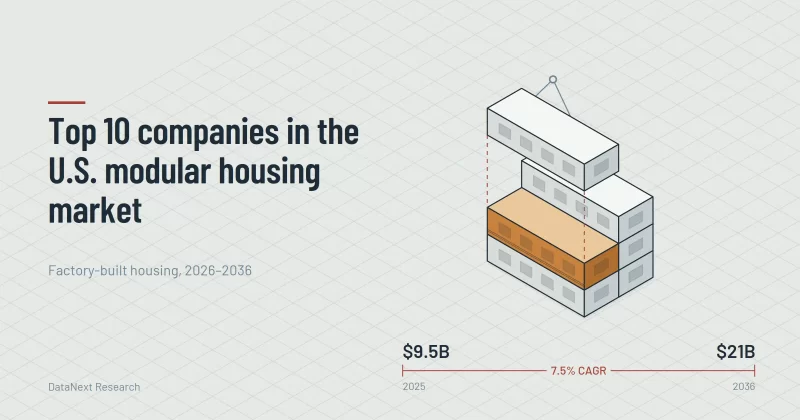
The U.S. modular housing market was worth USD 9.5 billion in 2025 and is on track to reach USD 21 billion by 2036, growing from USD 10.2 billion in 2026 at a CAGR of 7.5%. Steady growth, solid numbers. But hold that against the backdrop and something strange appears: in 2024, builders completed 1,019,000 single-family homes in this country. Just 13,000 were modular and 15,000 were panelized. That is roughly 3% of single-family completions — a share that has drifted down since the late 1990s, not up.
Which is odd, because every argument for building homes in a factory has gotten stronger. The country is short several million homes. Affordability has passed from strained to genuinely broken in most metros. The skilled trades workforce is shrinking and aging at the same time, so framers and carpenters are harder to find and more expensive to keep. Modular construction answers all three: it builds faster, uses less on-site labor, and delivers a schedule a developer can actually underwrite.
So why only 3%? Because the barriers are not technical. They are financial and cultural. Lenders and appraisers still treat modular as unconventional, which complicates construction loans and valuations. Buyers and even some local officials confuse modular homes — built to the same state and local codes as site-built homes — with HUD-code manufactured housing. Factories are capital-intensive and fragile: a slow quarter can strand a plant that took years to finance. And you still have to move a building down a highway.
The companies below are the ones working on that problem from different directions. Some are enormous, vertically integrated producers moving tens of thousands of homes a year. Some are regional family businesses that have quietly done this well for seventy years. And some are newer outfits trying to bring manufacturing discipline, better design, or new financing models to a sector that has resisted all three.
Want the full picture — sizing, segment forecasts, regional dynamics, and competitive benchmarking?Explore the complete analysis: U.S. Modular Housing Market (2026–2036)
The 10 companies at a glance
| # | Company | Headquarters | Where it plays | Scale signal |
|---|---|---|---|---|
| 1 | Clayton Homes | Maryville, TN | Attainable single-family, CrossMod, modular | ~16,000 employees; Berkshire Hathaway subsidiary |
| 2 | Champion Homes | Troy, MI | Manufactured, modular, ADUs, multifamily | ~USD 2.7B FY2026 net sales; 46 plants |
| 3 | Cavco Industries | Phoenix, AZ | Manufactured, modular, commercial structures | USD 2.24B FY2026 revenue; 20,842 homes sold |
| 4 | Legacy Housing | Bedford, TX | Value-focused homes for the southern U.S. | USD 164.6M 2025 revenue; three plants |
| 5 | Ritz-Craft Corporation | Mifflinburg, PA | Custom modular via independent builders | ~1,000 employees; ~25 states |
| 6 | Guerdon Modular Buildings | Boise, ID | Large-scale volumetric multifamily and hospitality | 200+ completed projects |
| 7 | Fading West Development | Buena Vista, CO | Workforce and disaster-response housing | ~USD 50M revenue; 1,000+ homes delivered |
| 8 | Plant Prefab | Rialto, CA | Architect-led custom modular and panelized | ~USD 104M raised; Certified B Corp |
| 9 | Dvele | San Diego, CA | Premium self-powered, resilient homes | ~USD 450–750/sq ft delivered |
| 10 | Boxabl | North Las Vegas, NV | Foldable factory-built units | Nasdaq-listed July 2026; USD 3.5B SPAC valuation |
1. Clayton Homes
Clayton is the largest builder of factory-built housing in the United States, and it is not close. Founded in Tennessee in 1956 and acquired by Berkshire Hathaway in 2003 for USD 1.7 billion, the company now employs roughly 16,000 people and has built more than 50,000 homes in a single year.
What makes Clayton relevant to a modular conversation — rather than just a manufactured-housing one — is CrossMod. These are HUD-code homes built with the features that normally separate site-built houses from factory ones: higher roof pitches, garages, covered porches, permanent foundations. The point is appraisal. A 2024 FHFA study found that modern manufactured homes, CrossMod included, appreciated at rates comparable to site-built homes, which is exactly the evidence the sector needs to unstick conventional financing. Clayton has been building whole neighborhoods around the concept, including Redbud Estates in London, Kentucky, a 51-home development where every house meets the Department of Energy's Zero Energy Ready Home standard.
The other Clayton advantage is vertical integration. Through Vanderbilt Mortgage and 21st Mortgage, the company finances the homes it builds. In a market where financing is the single largest constraint on adoption, owning that piece of the chain matters more than plant count.
2. Champion Homes
If you have been following this sector for a while, you know this company as Skyline Champion. It renamed itself Champion Homes, Inc. — the ticker is still NYSE: SKY — and it remains one of the largest producers of factory-built housing in North America.
The scale is real: net sales of approximately USD 2.7 billion in fiscal 2026 (year ended March 28, 2026), around 9,300 employees, and 46 manufacturing facilities across 20 U.S. states and three western Canadian provinces. The portfolio covers manufactured homes, modular homes, park model RVs, ADUs, and modular buildings for both single-family and multifamily markets. It also runs a factory-direct retail network of more than 80 stores and owns Star Fleet Trucking, which solves the transportation problem that trips up smaller manufacturers.
Champion has been making a deliberate case that modular does not have to mean visually compromised. In February 2026 the company won a Gold Award for Best Modular Home Design in the NAHB Best in American Living Awards for "The Muncy," a chalet-style custom modular home built in Pennsylvania with River Valley Builders. That kind of recognition does quiet work against the perception problem.
3. Cavco Industries
Cavco had its best year on record in fiscal 2026: net revenue of USD 2.24 billion, up 11.4%, on an all-time-high 20,842 homes sold. The Phoenix-based company builds manufactured and modular homes, park model RVs, cabins, and factory-built commercial structures, and it keeps expanding — it acquired American Homestar during the year and announced a new manufacturing facility in El Mirage, Arizona, in May 2026.
Cavco is also the reason a name you may be looking for is missing from this list. The Commodore Corporation, long the largest independent manufactured and modular homebuilder in the country, was acquired by Cavco in 2021. Commodore's regional brands — Pennwest Homes, Manorwood Homes, R-Anell, Colony Factory Crafted Homes, MidCountry Homes — now sit inside Cavco, and the Goshen, Indiana plant operates as Cavco-Goshen. Those brands still carry real weight in the Northeast, Mid-Atlantic and Midwest modular markets.
Like Clayton, Cavco owns its financing: CountryPlace Mortgage is an approved Fannie Mae and Freddie Mac seller/servicer, and Standard Casualty handles insurance. Management has also been vocal about chassis-removal legislation, which would let factory-built homes be produced without permanent steel frames and reclassified as modular — a regulatory change with meaningful consequences for how these homes are financed and zoned.
4. Legacy Housing Corporation
Legacy is the smallest of the publicly traded factory builders here, and 2025 was a hard year: net revenue of USD 164.6 million, down 10.7%, with net income falling to USD 41.8 million on 1,703 homes. The company also went through a significant leadership shake-up, with the CEO, CFO and general counsel all departing and founders Kenny Shipley and Curt Hodgson stepping back in.
It is still worth watching, for two reasons. First, its Texas factories in Fort Worth and Commerce are certified under the Texas Industrialized Housing and Buildings law — the Texas Modular Code — while its Eatonton, Georgia plant builds to Georgia state codes. That dual capability lets Legacy move between HUD-code and modular output depending on where demand sits. Second, it finances its own dealers and buyers, and its November 2025 acquisition of AmeriCasa Solutions assets for USD 19.9 million deepened both distribution and lending in Texas — the largest homebuilding state in the largest homebuilding region.
Legacy is a useful barometer for the value end of the market. When affordability pressure bites hardest, this is where it shows up first.
5. Ritz-Craft Corporation
Ritz-Craft is what a well-run modular business looks like when it has had seventy years to figure things out. Founded in 1954 with a plant in Argos, Indiana, and headquartered in Mifflinburg, Pennsylvania since the 1970s, it is now in its third generation of family ownership under the John family. Roughly 1,000 people work across its factories, and its homes reach about 25 states across the Northeast, Mid-Atlantic, Midwest and South.
The business model is the interesting part. Ritz-Craft does not sell to homebuyers; it sells through a network of independent builders who handle site work, foundations and final assembly. That structure keeps the factory focused on production while local builders carry the customer relationship, permitting and installation — the three things that most often go wrong when a manufacturer tries to do everything.
The company is also vertically integrated in the unglamorous places that matter: Ritz-Trans moves its modules coast to coast, and affiliated businesses handle building-materials distribution and mortgage services. Multifamily is currently its fastest-growing segment, which tracks with where the broader market is heading.
6. Guerdon Modular Buildings
Guerdon is the specialist on this list. The Boise, Idaho company does not chase single-family volume — it builds large-scale volumetric modular projects: apartment buildings, hotels, student housing, senior living, and workforce accommodation. More than 200 projects completed, with roots in the industry going back half a century.
This matters because multifamily is where modular's economics are cleanest. When you are producing 200 near-identical apartment units, factory repetition pays for itself in a way that a one-off custom house never quite manages. Guerdon combines manufacturing, construction, technology and architecture under one roof and delivers projects as a package rather than shipping boxes and wishing the general contractor luck — which is how a lot of ambitious modular multifamily projects have come unstuck.
7. Fading West Development
Fading West is the best recent argument that modular can do things conventional construction simply cannot.
The company was founded in 2016 in Buena Vista, Colorado, to solve a specific local problem: mountain towns like Breckenridge and Vail had priced out the workers who keep them running, and long snowy winters made outdoor construction impossible for half the year. In 2021 it opened a 110,000-square-foot factory. Today it employs around 160 people, generates roughly USD 50 million in revenue, and has delivered more than 1,000 homes. Its lean manufacturing approach, the company says, cuts costs by up to 20% and delivers a finished home in half the time of stick-built.
Then came Lahaina. After the August 2023 Maui wildfires, Fading West partnered with FEMA, state and local officials, and New York architecture firm DXA Studio to build 82 modular homes in two months, running two twelve-hour shifts a day. The homes were trucked to Seattle, shipped to Hawaii, and installed. It became the Kilohana Project — the first time FEMA offered displaced residents permanent-quality modular homes instead of trailers. The company has also delivered 52 modular apartments for the Town of Breckenridge.
That is the case for factory building, made in public.
8. Plant Prefab
Plant Prefab occupies the design-forward end of the market. Founded in 2015 in California and a Certified B Corporation, it builds both panelized components and full modules, and it is the operator most architect-led California projects route through. The LivingHomes catalog includes collaborations with Ray Kappe, Yves Béhar and KieranTimberlake, which gives buyers a curated starting point rather than a blank sheet.
The company has raised roughly USD 104 million and operates a Southern California facility sized for real volume. It builds to architect drawings rather than forcing clients into a fixed catalog, and it offers financing and permitting support — meaningful, because permitting and lender education are where custom modular projects usually stall. Delivered pricing sits well above entry level, so this is not the affordability play. It is the proof that factory building can produce architecture, not just units.
9. Dvele
Dvele builds premium "self-powered" homes from a San Diego base, with solar generation, battery storage, water filtration and indoor air-quality monitoring in the standard specification rather than as upgrades. Homes carry California HCD insignia and land in the region of USD 450–750 per square foot delivered.
The positioning is sharper than it first looks. In California, wildfire risk and grid reliability have become primary purchase criteria for a specific and growing buyer: someone rebuilding or building in a fire-prone or grid-constrained county who treats resilience as the actual brief. A factory is a good place to build that house, because envelope tightness, system integration and commissioning are all easier to control indoors than on a hillside. Dvele is small relative to the volume producers, but it is defining what the high-performance end of modular looks like.
10. Boxabl
Boxabl is the most visible and most debated company in factory-built housing. Founded in 2017 in North Las Vegas, it builds foldable units that ship flat and unfold on site. Its Casita is listed at USD 60,000 before shipping, installation and site work. In July 2026 the company began trading on Nasdaq under BXBL after completing a merger with FG Merger II Corp that valued it at USD 3.5 billion, having raised more than USD 230 million from over 50,000 investors.
Two caveats belong here, and leaving them out would do readers a disservice. First, classification: the Casita is certified as a park model RV under ANSI 119.5, and Boxabl has been working toward state modular approvals — so it is not yet modular housing in the code sense this market uses. Second, execution. The company has reported a waiting list around 150,000 people while producing a small fraction of that, faced delivery delays, and was the subject of a 2023 SEC inquiry regarding its executives, financial reporting and crowdfunding campaigns.
Boxabl is on this list because capital, attention and manufacturing ambition at this scale change the conversation whether or not the thesis works out. Whether it converts into homes at volume is the open question.
Also worth watching
- Connect Homes — Los Angeles-based, steel-framed modules sized to ship on standard transport, with financing and permitting support.
- Method Homes — Seattle-area custom builder, roughly USD 300 per square foot, known for design quality and residential plus commercial work.
- Impresa Modular — a nationwide modular general contractor rather than a manufacturer, which is a genuinely different model.
- Simplex Homes — Pennsylvania custom modular, strong in the Northeast builder channel.
- Champion Home Builders — the operating brand within Champion Homes, and a name you will still see on plant signage and contracts.
What this list actually tells you
Read the ten together and three things stand out.
Scale sits with the manufactured-housing incumbents. Clayton, Champion and Cavco dominate factory-built volume, and all three build modular alongside HUD-code homes. This is why modular statistics can be confusing — the same factories, sometimes the same production lines, produce both. It is also why chassis-removal legislation and CrossMod appraisal evidence matter so much. The fastest route to more modular housing may be reclassifying and re-financing homes these companies already build.
The interesting growth is regional and application-specific. The Midwest already completes about 7% of its housing — some 8,000 homes — using offsite methods, the highest share in the country, thanks to a dense cluster of factories in Indiana and Ohio. The Northeast has the tradition and the manufacturers, particularly in Pennsylvania. The South builds the most homes of any region, so even modest penetration means large volume. The West, led by California, has the highest costs and the most supportive ADU policy, which is why the fastest-growing segment nationally is accessory dwelling units.
The barrier is money and perception, not manufacturing. Every company here can build a good house. What separates them is whether they have solved financing, appraisal, permitting and installation. The ones that own their lending arm, their trucking, or their builder network are the ones that convert factory capacity into delivered homes. That is the whole game.
Frequently asked questions
What is the U.S. modular housing market worth? The market was valued at USD 9.5 billion in 2025 and is projected to reach USD 21 billion by 2036, growing from USD 10.2 billion in 2026 at a 7.5% CAGR. The estimate covers single-family modular, multifamily modular, and accessory dwelling units, along with related offsite residential construction.
Who is the largest modular home builder in the United States? Clayton Homes, a Berkshire Hathaway subsidiary, is the largest builder of factory-built housing overall. Among publicly traded producers, Champion Homes (NYSE: SKY) reported approximately USD 2.7 billion in fiscal 2026 net sales and Cavco Industries (Nasdaq: CVCO) reported USD 2.24 billion. Ritz-Craft is often cited as the largest family-owned dedicated modular manufacturer.
What is the difference between a modular home and a manufactured home? A modular home is built in sections in a factory to the same state and local building codes as a site-built home, then transported and assembled on a permanent foundation. A manufactured home is built to a federal HUD code. The distinction drives everything downstream — financing, appraisal, zoning and resale — which is why the two are so often confused and why that confusion is expensive for the industry.
Why is modular still only 3% of U.S. single-family completions? Four reasons: financing and appraisal practices built around site-built homes; persistent confusion with manufactured housing; the capital intensity and operational fragility of running factories; and the logistics of transporting modules. None of these are engineering problems, which is why the sector's potential remains largely unrealized.
Which modular housing segment is growing fastest? Accessory dwelling units, driven by legalization in California and a growing number of other states and cities. Affordable and workforce housing is the other policy-supported growth area. Single-family modular remains the largest segment by share, while multifamily modular offers the strongest unit economics because repetition suits factory production.
Is modular construction actually more sustainable? The environmental case is reasonably strong. Controlled factory production reduces material waste substantially, tighter and more consistent building envelopes lower operating energy use, and shorter on-site durations cut local disruption, traffic and associated emissions. There is a social dimension too: faster, more cost-predictable construction can help deliver affordable and workforce housing that would otherwise not get built.
The next decade
The honest read on U.S. modular housing is that it has been a decade away from breaking through for about fifty years. What is different now is that the pressure on the alternative has become severe. You cannot hire framers who do not exist. You cannot make homes affordable at current site-built costs and timelines. You cannot meet a multi-million-unit shortage one stick-built house at a time.
Expect steady rather than explosive growth to 2036 — led by ADUs, where policy has created genuine demand, and by developers in high-cost, labor-scarce markets who will pay for schedule certainty. The companies best placed are the ones that treat financing, appraisal and installation as part of the product, not someone else's problem.
The factories are not the constraint. They never were.
The insights above draw on our full strategic assessment of the U.S. modular housing market, covering:
- Market sizing and forecasts to 2036, by construction type, material and end use
- Regional dynamics across the Northeast, Midwest, South, West and emerging state markets
- Competitive benchmarking across 80+ companies
- Financing, appraisal and factory capacity constraints
- Sustainability impact analysis and Porter's Five Forces
Access the full report: U.S. Modular Housing Market (2026–2036)
Or download a sample to review the methodology and coverage: Download Sample
Related topics: U.S. Modular Housing Market · Modular Construction · Offsite Construction · Factory-Built Housing · Affordable Housing · ADU Market · Prefab Homes
Related Articles
Top 10 Companies in the U.S. Black Soldier Fly Market
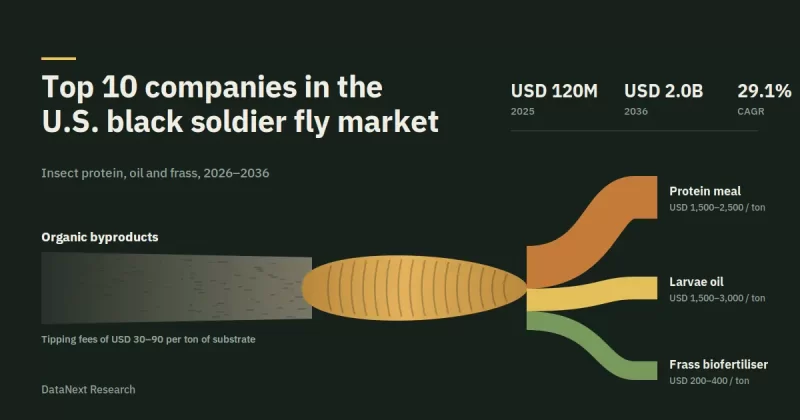
The top 10 U.S. black soldier fly companies in a market heading to USD 2.0 billion by 2036 — EnviroFlight, InnovaFeed, Protix, Entobel and more, ranked.
Top 10 Companies in the Japan Compostable Resin Pellet Market
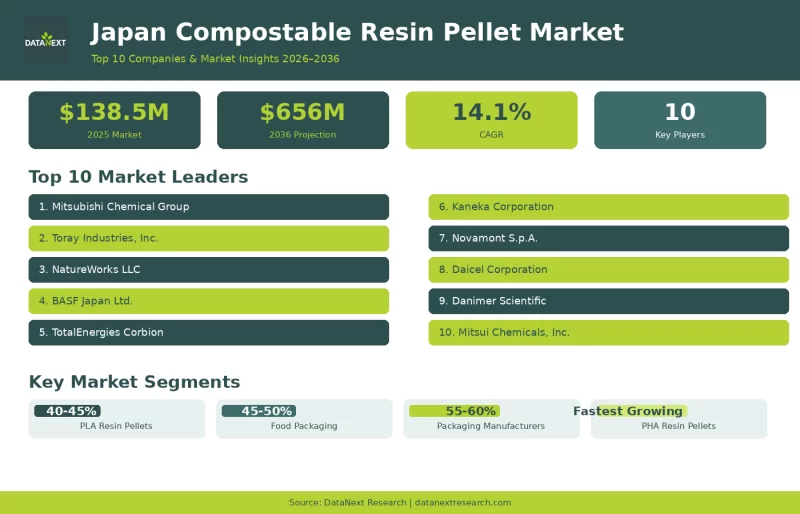
Discover the Top 10 Companies in the Japan Compostable Resin Pellet Market driving growth to USD 656M by 2036, advancing PLA, PHA & bio-based packaging innovation.
Top Companies in the Japan Aircraft Fuel Cell Module Market
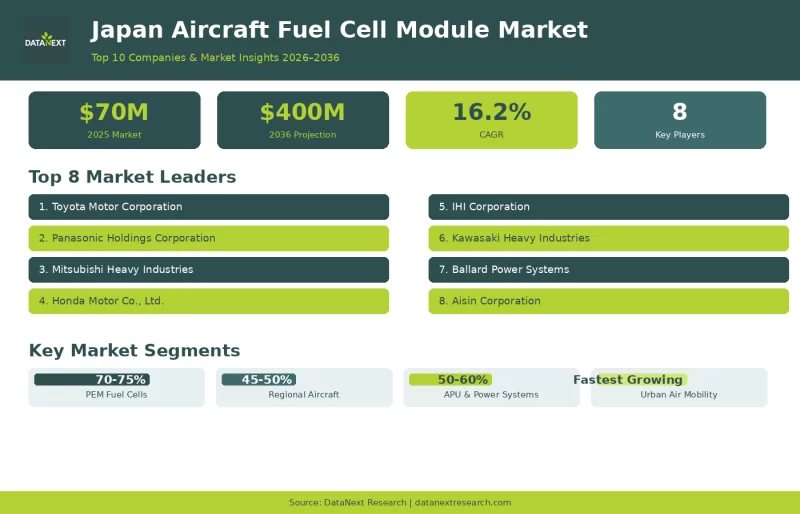
Discover the Top Companies in the Japan Aircraft Fuel Cell Module Market driving growth to nearly USD 400M by 2036. Explore leaders like Toyota Motor Corporation, Mitsubishi Heavy Industries, Ltd., Kawasaki Heavy Industries, Ltd., and more advancing hydrogen propulsion, PEM fuel cells, and zero-emission aviation across Japan’s aerospace ecosystem.